

Because simpledata can’t list or write,
rctl and the SDK need the PostgreSQL-backed API server.
Manifest shape (YAML files)
Each file holds a list of resources. Every resource has the same top-level fields.
When simpledata loads the files, it checks each resource against its schema and exits on the first invalid one. It also exits when two resources share a
ref, when a ref contains a space, or when a *Ref field points to a resource that doesn’t exist.
YAML groups fields under
metadata and spec, sometimes with extra nesting (for example spec.context.domainUri on a Domain). The API and SDK use flat objects (domainUri). Each resource page lists both names.API shape (rctl, SDK, gRPC)
Through the API, a resource is a flat object. You send the resource fields; the server sets the rest.
Responses also embed the objects that
*Ref fields point to. For example, an Agent with domainRef comes back with a domain object. When you delete a referenced resource, pgdata clears the reference (sets it to null) on the resources that used it. Deleting a Domain or Trunk also deletes its egress policies or outbound URIs.
Resource types
How resources relate
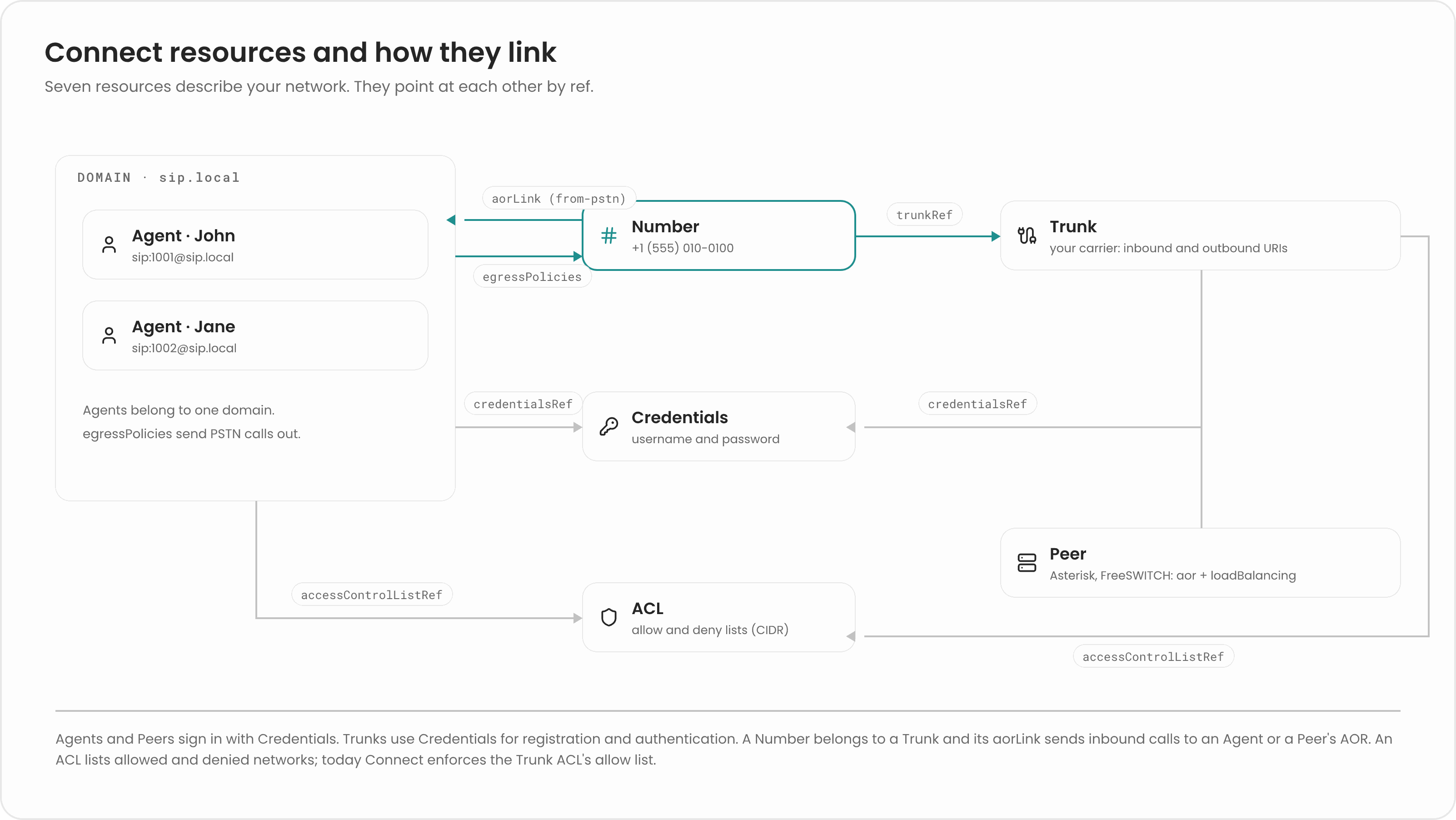
For how these resources drive routing, see Connect mode and Routing.